

In many growing companies, customer information lives everywhere—emails, spreadsheets, chat apps, notebooks, and people’s heads. Sales teams chase leads with incomplete context, customer service responds without full history, and management struggles to see what’s really happening across the business.
This is where Customer Relationship Management (CRM) software becomes transformational.
CRM software is often seen as a tool just for sales, but when implemented properly, it becomes the backbone that unites sales, marketing, customer service, and leadership around one trusted source of truth to improve overall customer experience.
Below are five practical ways a company benefits from CRM software, especially for SMEs and growing organisations. In competitive markets, these are no longer “nice-to-have” advantages—they are essential.
#1 A Single Source of Truth for Customer Data
Picture this: a salesperson promises one thing, support has a different history of issues, and finance sees a payment problem no one mentioned. The customer hasn’t changed—but the information about them has. This leads to confusion, duplicated work, and inconsistent customer experiences.
A CRM centralises all customer data into one system:
- Contact details
- Company information
- Sales conversations and meeting notes
- Quotes, contracts, and purchase history
- Support tickets and issues
When everyone works from the same data, clarity improves immediately.
Why this matters:
- Sales conversations become more relevant and personalised
- Customer service can respond faster with full context
- Management gains confidence that reports reflect reality
Instead of asking, “Who spoke to this customer last?”, teams can simply check the CRM.
Over time, this shared visibility builds trust internally and creates a more consistent experience externally.
#2 Better Sales Pipeline Visibility and Forecasting
Without a CRM, sales pipelines are often based on gut feel or manual updates. This makes forecasting unreliable and decision-making risky.
CRM software brings structure and visibility to the sales process by:
- Defining clear deal stages
- Tracking deal value, probability, and timelines
- Showing which opportunities are moving—or stuck
Sales managers can instantly see:
- How many deals are in each stage
- Which deals need attention
- Whether targets are realistically achievable
For leadership, this turns sales from a black box into a measurable system.
Why this matters:
Better forecasting leads to better decisions—hiring, inventory planning, marketing spend, and cash-flow management all become more predictable.
Instead of reacting at the end of the quarter, companies can act early and course-correct in time.
#3 Improved Customer Experience and Retention
Customers don’t just buy products—they experience how easy or difficult it is to work with your company.
CRM software improves customer experience by ensuring:
- No conversation gets lost
- Follow-ups happen on time
- Customers don’t need to repeat themselves
When a customer contacts your team, anyone can quickly see:
- Previous conversations
- Open issues or unresolved tickets
- Past purchases and preferences
This allows teams to respond with confidence and empathy rather than uncertainty.
Why retention improves:
- Customers feel remembered and valued
- Issues are resolved faster
- Communication feels consistent, not fragmented
Over time, CRM helps shift companies from reactive support to proactive relationship management—spotting unhappy customers early and addressing issues before they escalate.
For example, a field service company used to hear about problems only when customers complained. A lift broke down repeatedly, response times slipped, or technicians arrived without the right parts—and the issue only surfaced after an angry call to management. By then, the team was reacting under pressure, trying to explain what happened instead of preventing it.
After adopting a CRM connected to their field service operations, the picture changed.
The system revealed patterns across customer accounts:
- Certain sites had repeated breakdowns on the same assets
- Jobs at specific locations consistently took longer than planned
- Follow-up visits were increasing after “completed” work orders
With this data, the company stopped waiting for complaints. They adjusted preventive maintenance schedules, flagged high-risk assets, and assigned more experienced technicians to problematic sites. Account managers were also prompted to proactively check in with customers showing early warning signs.
Over time, breakdown frequency dropped, response times improved, and customer conversations shifted from frustration to confidence. The CRM didn’t just log jobs—it helped the company plan ahead, reduce firefighting, and deliver a more reliable field service experience.
#4 Stronger Team Accountability and Collaboration
As companies grow, accountability becomes harder. Who owns which customer? Was a follow-up done? Is a deal delayed because of the customer—or because the team missed a step?
CRM software creates clarity by:
- Assigning owners to leads, accounts, and deals
- Tracking activities like calls, emails, and meetings
- Logging tasks and reminders
This transparency helps teams collaborate.
For managers:
- Performance reviews become fact-based, not emotional
- Coaching conversations are clearer and fairer
- High performers stand out naturally
For teams:
- Expectations are clear
- Handovers are smoother
- Work feels more structured and less chaotic
When accountability is built into the system, trust increases—and micromanagement decreases.
#5 Data-Driven Decisions and Scalable Growth
Perhaps the most strategic benefit of CRM software is data-driven decision-making.
A good CRM doesn’t just store data—it turns everyday activity into insights:
- Which industries convert best
- Which lead sources produce quality deals
- Why customers churn
- How long sales cycles really take
These insights help companies answer important questions:
- Where should we invest more marketing budget?
- Which customers are most profitable?
- What processes need improvement?
As the business scales, CRM ensures growth is intentional, not accidental. Companies build repeatable systems that work even as teams change and expand.
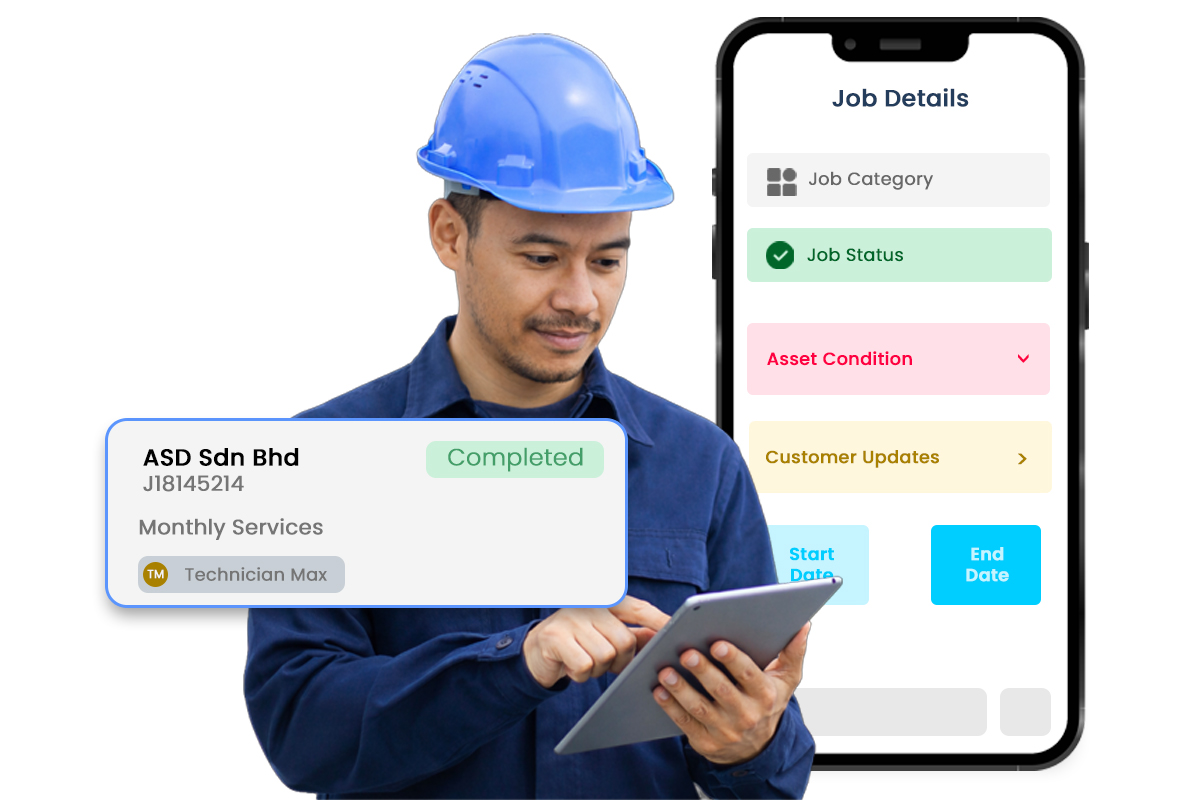
With Caction, all customer-related information is consolidated into a single view. Contracts, assets, job history, photos, response times, and recurring issues are connected to each customer and site, giving teams immediate context.
This visibility leads to insights. Caction highlights patterns such as repeated breakdowns, frequent rework at specific sites, or declining SLA performance across accounts. Managers can spot risks early, adjust maintenance strategies, and engage customers proactively.
Caction connects customer data with operational intelligence, turning day-to-day activities into clear, actionable insights.
CRM Is Not About Software—It’s About Discipline
It’s worth noting that CRM software alone doesn’t fix broken processes. The real value comes when a company:
- Commits to using it consistently
- Aligns teams around shared definitions and workflows
- Treats customer data as a strategic asset
Companies that succeed with CRM view it not as an admin tool, but as a customer relationship system—one that reflects how they serve, communicate, and grow with their customers.
Take your customer relationship management to the next level with Caction, which brings all customer information—contracts, assets, job history, communications, and service performance—into one connected platform, giving teams a clear and shared view of every customer. With real-time visibility and operational insights, companies can manage relationships proactively, address issues early, and build long-term customer trust.



Leave a Reply