

A field service management system can feel like a “simple software purchase” at the start—until you’re three months in, the team is frustrated, data is messy, and leaders still can’t see what’s happening on the ground.
The right system does more than “digitalise forms.” It creates operational clarity: jobs move smoothly, updates are trustworthy, work is accountable, and decision-making gets faster. The wrong system becomes another admin burden—just in a nicer interface. For example, a poor operations system may freeze or crash when technicians upload photos on-site, force users to re-enter the same information multiple times, and hide simple actions behind confusing menus—leading frontline staff to abandon the system and fall back on chat messages or paper notes just to get their work done.
Here are some of the most important things to consider before choosing a field service management system, especially if you run maintenance, multi-site operations, or any business where execution happens away from HQ.
#1 Start with the outcome, not the feature list
Most software demos show features. But your team doesn’t live in features—they live in outcomes:
- Faster response time
- Fewer repeat visits and rework
- Better customer updates
- Cleaner handovers
- Higher asset uptime
- Lower operating costs
- More consistent SOP execution
- More accurate reporting for management
Before you shortlist systems, define what “good field service operations” means for your business. A simple way: list your top recurring operational frustrations today, then decide which would make the biggest financial or customer impact if solved.
If a system can’t clearly connect to outcomes you care about, you’ll likely end up paying for “nice-to-have” functions that don’t move the needle.
#2 Fit with your real workflows (not ideal workflows)
A common failure happens when software is designed around “perfect processes,” but your business runs on reality: site constraints, technician habits and messy coordination.
Ask these questions:
- Can it handle your job types (preventive maintenance, breakdowns, inspections, installations, audits, incident handling)?
- Can it support exceptions without breaking the process?
- Does it match how your team actually works day to day?
A good system doesn’t force your team to fight it. It should reduce thinking and admin, not increase it. Your technicians and frontline staff should feel like the system makes their work easier—not like they are “feeding data to please management.”
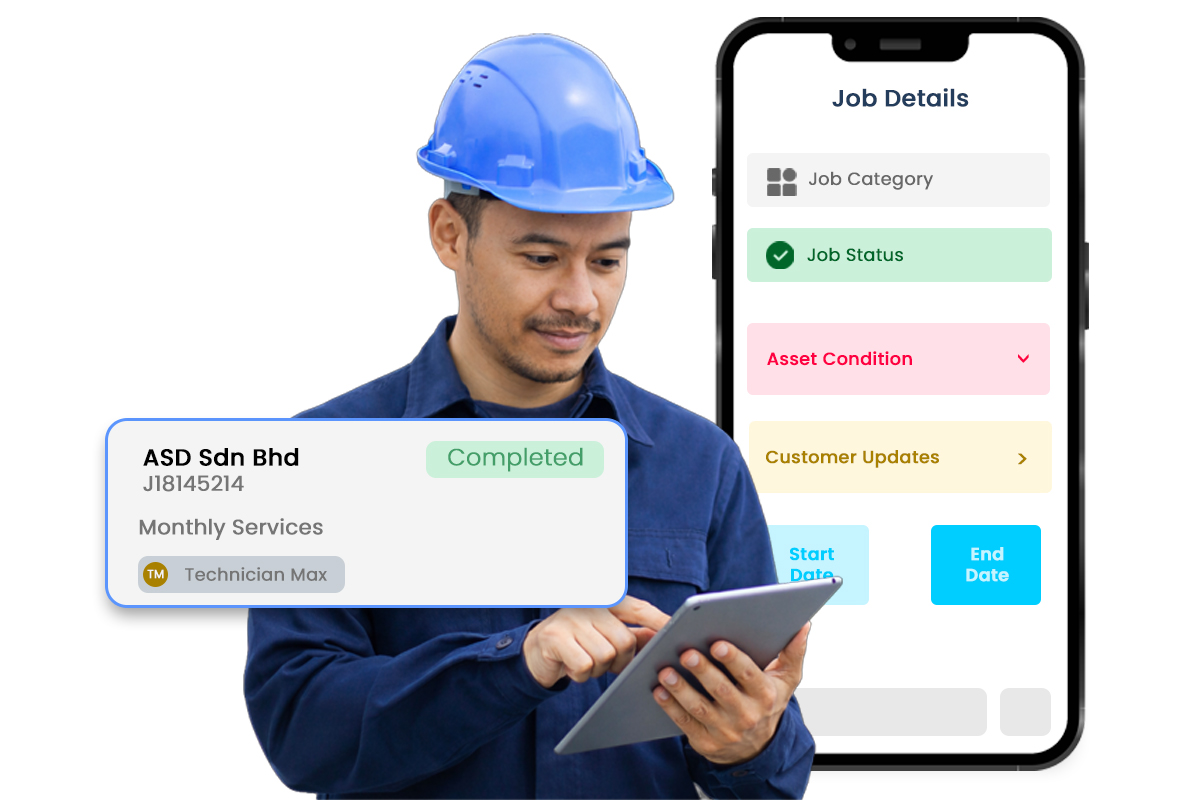
For example, with Caction, a technician completes a job by ticking a guided checklist, snapping a few photos, and closing the task on their phone in under a minute—those same actions automatically update the job status, asset history, customer record, and management dashboard, so technicians finish faster instead of filling in extra reports just for management.
#3 Adoption matters more than “power”
The most powerful system is useless if the team avoids it.
When evaluating software, pay attention to usability under pressure: when technicians are tired, when the internet is weak, when supervisors are rushing, when there are multiple jobs in a day.
Look for:
- Simple mobile experience
- Minimal clicks for common actions
- Fast loading
- Clear prompts that reduce mistakes
- Easy photo capture and real-time updates
- A clean way to record parts used, time spent, and job notes
If you want real visibility, your system must win frontline adoption. “Management loves it” is not enough. The best systems are loved by the people who use them most.
Choosing the right field service management system is crucial, because a system that is easy to use encourages adoption, reduces mistakes, and helps teams focus on getting work done rather than figuring out the tool.
Additionally, it would be also ideal if a field service management system could address the following considerations to deliver real operational impact.
#4 Data-driven insights
A good field service management system does more than streamline daily work—it turns execution into insight. By capturing structured, real-time data from jobs, assets, and teams, the system enables leaders to spot patterns, identify bottlenecks, proactively manage issues, and make informed decisions that continuously improve performance, profitability, and customer satisfaction.
Caction leverages Microsoft analytics technology to turn everyday operational data into clear, actionable insights for managers and leaders. By integrating with tools like Microsoft Power BI and Azure, Caction turns data into easy-to-read charts that enable faster, more confident decisions based on real-time operational performance.
For example, Caction provides clear, real-time insights into team performance, showing metrics such as response times, completion rates, and rework trends across jobs. This allows managers to quickly identify bottlenecks, recognise high performers, and take timely action to keep operations running smoothly.
#5 Scalability across sites, teams, and customers
If you plan to grow, you need a system that scales cleanly:
- Multi-branch reporting
- Role and permission management
- Standard SOP rollout across sites
- Consistent customer communication
- High volume job handling without slowing down
What works for a 10-person team can break at 100 people if structure isn’t built in.
#6 Implementation and after-sales support
This is where many systems disappoint. A great demo does not guarantee a successful rollout.
Ask directly:
- Who will guide implementation?
- Do they help map workflows and clean data?
- What does onboarding look like for technicians and supervisors?
- How fast is support response?
- Do they provide local or regional support (important for Asian SMEs)?
- What happens when you need changes after go-live?
A system becomes part of your operating DNA. If support is weak, your business will feel it every day. Caction is customisable to fit your real operational workflows—from job types and SOPs to forms and reporting—while being supported by dedicated after-sales consultation that helps refine processes, adapt the system as your business evolves, and ensure you continue to gain long-term value from the platform.
In conclusion, choosing the right field operations management system is a strategic decision that shapes how smoothly your business runs every day and how well it grows in the future. Caction believes that a good system not only simplifies execution for frontline teams but also transforms operational data into meaningful insights for better decisions. If you’re looking for a field service management system, Caction is designed with this in mind—making daily work easier for teams on the ground while giving leaders clear visibility, accountability, and intelligence to run confident, high-performing operations.



Leave a Reply