

Field service management systems (FSMs) have become indispensable for businesses aiming to enhance their operational efficiency. These tools streamline workflows, improve communication, and provide real-time data, benefiting organizations both large and small. Here are ten ways an FSM can help your business operate like clockwork:
1. Easier job scheduling and dispatching
FSMs solve many of the challenges associated with manual scheduling. They provide visibility into planned jobs and technician availability, preventing conflicts, and ensuring that the right person is dispatched to the right task.
With job scheduling, FSMs allow technicians to receive updates on last-minute jobs through the system without the delays of traditional communication methods, such as phone calls or emails. This results in faster responses to service requests, minimizing downtime between jobs and increasing overall productivity.
2. Real-time collaboration and communication
FSMs enable seamless collaboration between office staff and on-site technicians. On-site teams can update job progress in real time, allowing management to address issues swiftly and efficiently.
By improving communication and teamwork, FSMs enhance the quality of service and ensure better visibility into job progress. This creates a cohesive workflow where every team member stays informed and aligned.
3. Automated task reminders
Recurring tasks such as preventative maintenance or overdue client follow-ups can slip through the cracks without proper reminders. FSMs automate these reminders, ensuring that important jobs are not overlooked.
This feature helps staff stay on track, prioritize tasks, and deliver better customer service, ultimately boosting client satisfaction and retention rates.
4. Centralized data management
FSMs consolidate all data—such as customer information, service histories, and job details—into a unified system. This centralization makes data easier to access and reduces the risk of important records getting lost or misplaced.
With all critical information at their fingertips, businesses can operate more efficiently and reduce administrative overhead.
5. Digital forms and to-do lists for better SOP compliance
FSMs enable standardized digital checklists and to-do lists, helping technicians adhere to standard operating procedures (SOPs). These tools ensure consistent service quality and reduce the likelihood of errors during service delivery.
This is particularly useful for maintaining regulatory compliance, as businesses can easily track and document adherence to quality and safety standards.
6. Improved asset management
Tracking assets such as tools, equipment, and spare parts can be a logistical nightmare without proper systems. FSMs simplify this process by consolidating all asset information, including service history, location, and life cycles.
This improved visibility ensures that technicians always have the tools and parts they need, reducing delays caused by misplaced or unavailable resources.
7. Data-driven decision making
FSMs collect data in real-time from employee input, ensuring that reporting is both accurate and up-to-date. Businesses can use this data to analyze performance, identify trends, and make informed decisions that improve operations.
By leveraging analytics, managers gain insights into areas that need improvement and can optimize workflows accordingly.
8. Mobile access for on-site technicians
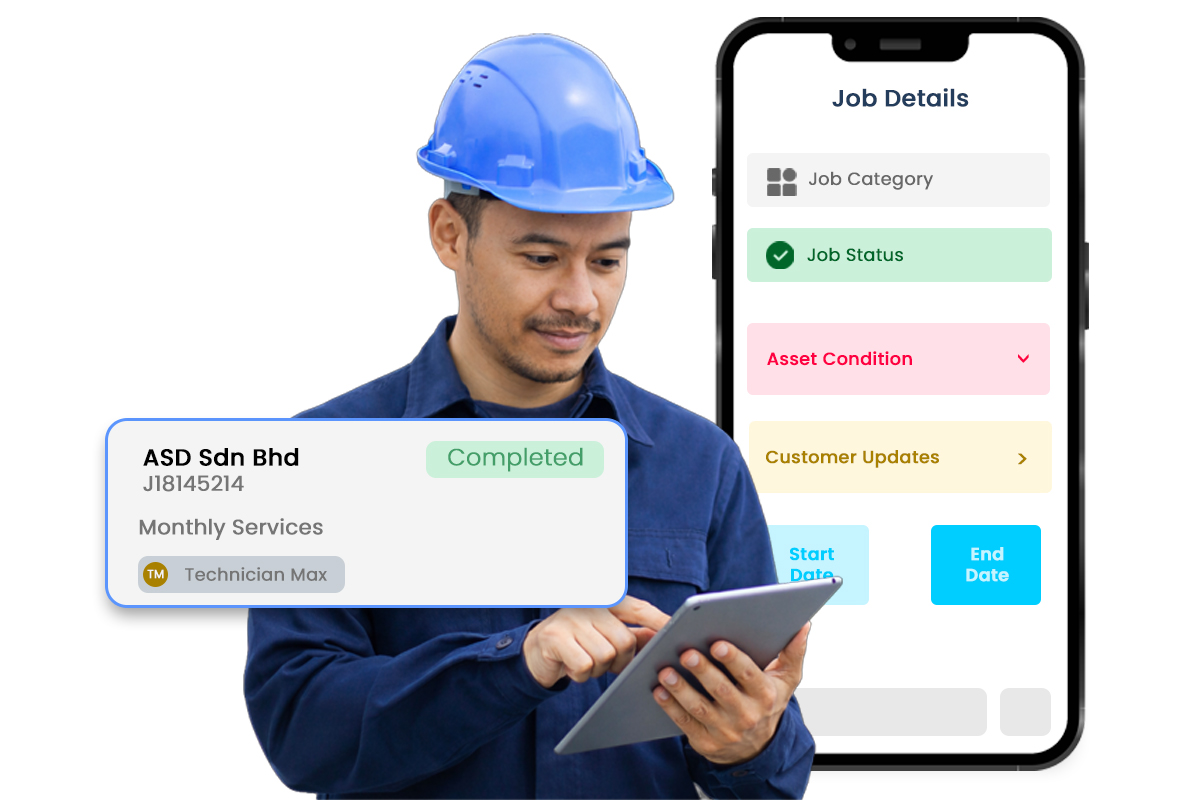
FSMs empower technicians with mobile access to crucial information, such as job details, customer contact information, and asset records. This accessibility allows technicians to work more efficiently and resolve issues faster.
With accurate information at their fingertips, technicians can make better-informed decisions and deliver higher-quality service.
9. Customizable digital service reports
FSMs allow technicians to create service reports on the spot, incorporating photos, videos, and other necessary documentation. These reports can be customized to meet specific requirements and shared instantly with customers for feedback via e-signatures.
This feature reduces delays in report filing and improves record-keeping efficiency, saving time for both technicians and office staff.
10. Stay productive even while offline
One of the most powerful features of FSMs is their ability to work offline. Technicians can access documents, update job statuses, and record data even in areas without internet connectivity. Once reconnected, all data is automatically synced. This ensures that technicians remain productive regardless of location, improving service delivery in remote or challenging environments.
Conclusion
All in all, field service management systems are invaluable tools for boosting productivity and operational efficiency. By empowering your staff to perform at their best, delivering a seamless experience for your customers, and minimizing unnecessary costs, an FSM like Caction can transform the way your business operates. With the right system in place, you can streamline workflows, enhance service quality, and take your business to new heights. Contact us today!



Leave a Reply