

Is technology replacing our jobs? No. As humans, there’s only so much we can handle – and our robot allies are there to support us and unlock new possibilities. Ultimately, it’s still up to us to decide how we create and use it.
For small and medium-sized enterprises (SMEs), the right tools streamline workflows, reduce inefficiencies, and keep them competitive.
Here are 7 essential digital tools SMEs need to thrive.
1. Task Management Tool
Are you still documenting your tasks by hand or in Excel sheets? If yes, it might be time to change that.
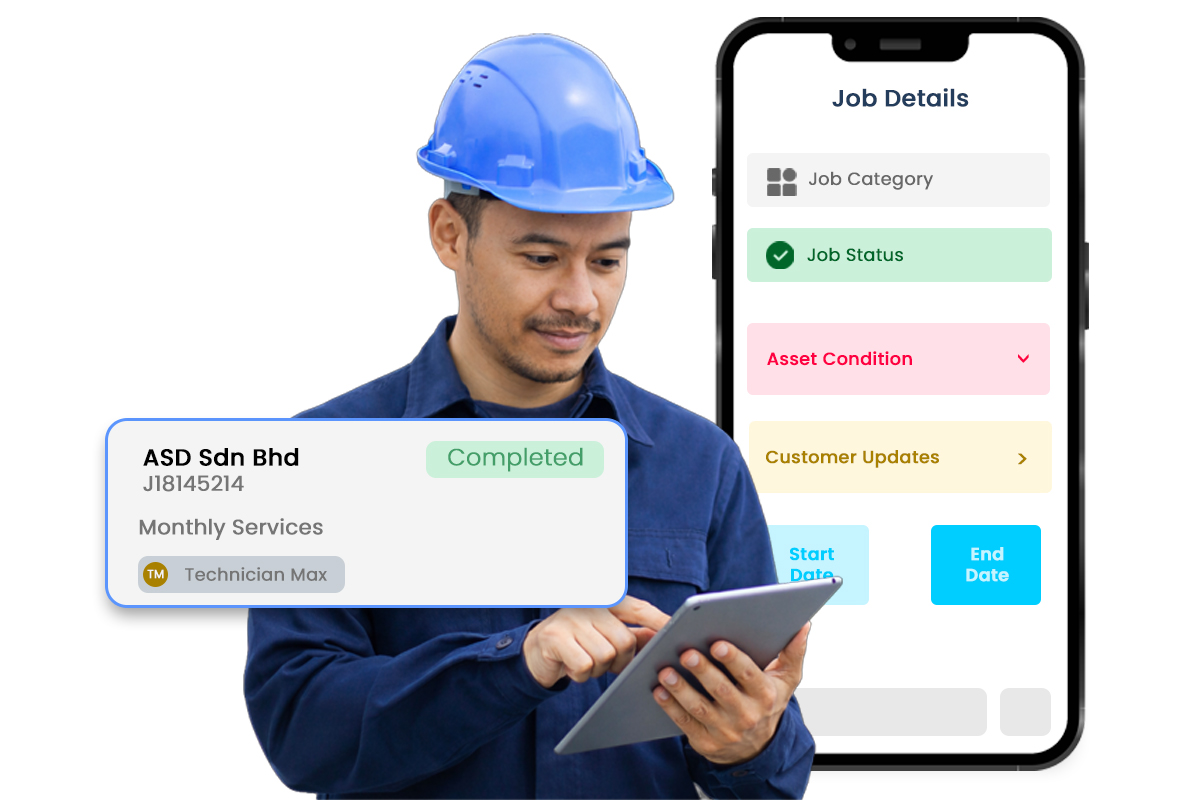
Manually managing tasks leads to missed deadlines, miscommunication, and inefficiencies. Task management tools streamline workflows, ensuring team members stay on track by:
- Organising workflows by sorting tasks into categories
- Enhancing team collaboration by clearly documenting each job
- Breaking down complex tasks into manageable steps with to-do lists
For example, a maintenance job can be broken into:
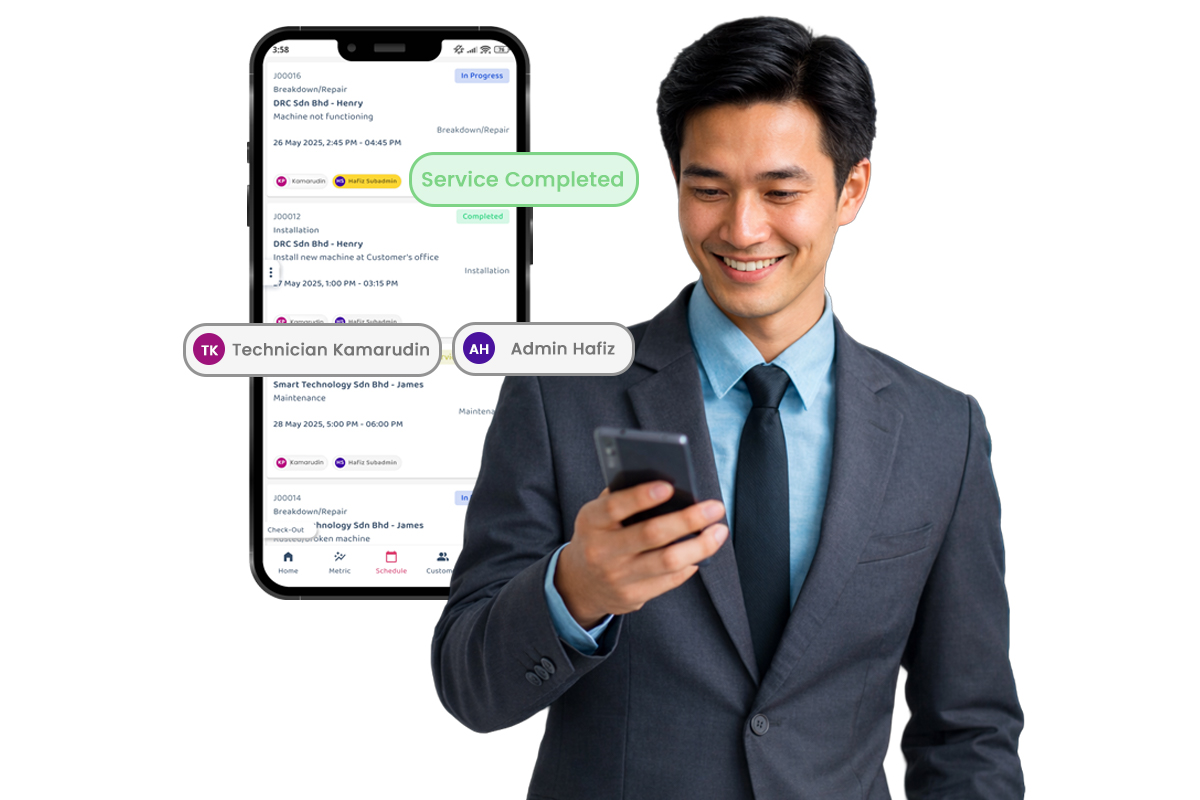
Check-in → Inspection → Maintenance execution → Service sheet generation → Check-out
2. Data Management Tool
Paper-based systems are slow, error-prone, and vulnerable to data loss. Hyundai Elevator Malaysia’s Operations Manager, Mr. Thanesvaran, shared that handwritten reports often take time to prepare and may not be filed correctly.
Cloud-based data management tools centralise information, making it accessible anytime, anywhere. They also ensure data security and compliance without relying on physical storage. Best of all, you only need an electronic device and a place with Wi-Fi to get started.
Tip: Consider cross-platform applications like Microsoft Teams, or Caction’s cloud-based database. These allow you to access and manage your work seamlessly from both PC and mobile devices.
3. Performance Metrics Tracker
Without performance tracking, inefficiencies and recurring issues may slip by unnoticed. For example, in August 2024, a People’s Housing Project (PPR) faced unresolved lift breakdowns beginning in 2023. A contractor who failed to repair lifts at the project previously was rehired, highlighting the lack of performance accountability.
To avoid such issues, a performance tracker is a must-have. It ensures accountability while providing data for decision-making and problem-solving. For example, Caction shows the top breakdowns and the technicians assigned to the jobs. From there, you can assess the situation and provide solutions based on your findings.
Furthermore, you can even use performance metrics to introduce employee incentives. The new incentives can enhance the team’s spirit and encourage them to deliver quality work.
4. Inventory Management Tool
Imagine this: You’re boiling your pasta noodles and your stove goes off. Upon inspection, you realise you’re out of gas and must wait for a replacement before you can resume. What if this happened at work? After all, one cannot work on an empty tank, right?
This is where inventory management tools matter. They help track your assets and stock levels. Before each job, you can use them to
- Audit your inventory
- Track your assets
- Conduct regular maintenance
Having an inventory tool reduces delays, downtime, and hardware malfunctions. Moreover, it ensures workplace safety and enhances your team’s performance.
5. Digital Reporting Tool
Raise your hand if reporting and administrative tasks often give you headaches. We get it.
Manual reporting can be overwhelming and prone to errors, especially during crunch time. Digital reporting tools improve efficiency, transparency, and accuracy.
A good digital reporting tool allows businesses to:
- Create customised reports based on key performance indicators (KPIs)
- Generate visual insights, such as pie charts and tables
- Store and retrieve past reports quickly
6. Digital Scheduling Tool
No matter the business, timing matters. Poor scheduling leads to missed deadlines, overworked employees, and project delays.
Here are two examples: A café waiter may have to fill in on a day off because the manager didn’t know who else was available. Or a technician might have to postpone a maintenance job due to a last-minute “urgent” request.
Hence, digital scheduling tools help businesses plan tasks, allocate manpower, and set reminders. When these areas improve, so do your team coordination, task management, and efficiency.
Tip: Set recurring reminders for routine tasks, deadlines, and appointments. Also, check your team’s availability before assigning jobs.
7. Time and Attendance System
“How do I know whether an employee is doing their job?”
Managers often ask this question, especially when managing remote teams. As such, they may hesitate to delegate tasks or struggle with trust issues.
If you want to improve accountability without micromanaging, a Time and Attendance System (T&A) is a must-have. It allows your team to:
- Check in and update task progress remotely
- Log working hours for payroll tracking
- Ensure task completion and accountability
Try adding daily check-ins and check-outs to your team’s workflow. This method ensures accountability, and that each task is completed correctly. You can also use the T&A system to streamline payroll and delegate tasks.
Which Digital Tool Is Most Important?
For SMEs, digital tools are business essentials, but selecting the right ones is key.
Solutions like Caction provide an all-in-one platform for task management, performance tracking, inventory control, and more. Instead of juggling multiple software applications, you can integrate all these essential tools in one place.
Start digitising your business today to boost efficiency, enhance collaboration, and gain a competitive edge!
Learn more here.


Leave a Reply